STRATEGIC ANALYSIS: Definition, Types, Advantages and Disadvantages
By: Phos Consults
2023-10-12
As an organization strives to grow daily, it is important to conduct a strategic analysis. This helps the organization to know its strengths and weaknesses, which is vital in its growth, and uses it as a competitive advantage in the global market.
What is Strategic Analysis?
Strategic Analysis is the process of researching an organization's environment, market competitors, latest trends, innovations, etc. This is to enhance decision-making and the smooth working of that organization. With the help of strategic planning, the goal or objective that is set by an organization can be achieved.
For a company to improve, it must conduct a strategic analysis, which will help them determine what areas need improvement and those that are already doing well. As a business owner, it is important to implement strategic analysis to stand in the global market.
Do you know that to achieve long-term success, you have to have a goal and mission for your organization?
Do you also know that all leading organizations who are well known for their achievements have years of strategic planning being implemented at various stages?
Strategic planning is a long-term task that involves continuous and systematic planning and resource investment.
If you desire to build an organization that will stand strong and do exceedingly well in the global market, then it is important to implement strategic analysis.
Important Areas to Consider When Performing a Strategic Analysis for Your Organization
How is the market constituted: It is essential to know how the market in your niche is constituted. This will help you map out areas where you have to improve for your products or services to be accepted.
Who are the active clients in this sector: You should know your target audience. Your products or services are not for everybody. Identifying your clients will help you create a product or service that will fit their pressing needs or desires.
Who are your competitors: Knowing your competitors is key if you want to achieve success. An organization without a competitor will hardly grow. Find out who are your competitors, and study what they do differently and how they do it. This will give you a view of how best to set your services to a standard where your customers/clients will want to do business with you.
Strategic planning: Identify the strategies that will help you be an unbeatable player in the marketplace and implement them. Strategic planning helps to predict future events and deduce alternative strategies if a plan doesn't work out as expected.
Types of Strategic Analysis
1. Internal Strategic Analysis: As the name implies, this is done internally within an organization. It involves identifying the positive and negative points of an organization, evaluating its strengths and weaknesses, evaluating its potential and capacity to grow, what needs to be corrected within the organization, and how to implement it.
This analysis should be oriented to the market, focusing on the client. It is important to know that these strengths only make sense when they help the company to fulfil clients' needs.
One of the most used techniques for strategic analysis is SWOT analysis.
What is SWOT Analysis

SWOT focuses on the internal factors (Strengths and Weaknesses) and the external factors (Opportunities and Threats) that directly impact an organization. It is more detailed and specific to an organization itself.
Performing a SWOT analysis will help you create a strong and long-term vision through strategic planning for your organization.
It is important to constantly evaluate the environment in which the company operates and act accordingly.
SWOT analysis will help you to prevent several problems that can arise if there is no systematic analysis.
There is no better way to benefit from a strategically performed analysis than to use it to detect the strengths, opportunities, weaknesses, and threats that your project may suffer.
To be able to perform better in your organization, there are key principles to be followed, these include:
STRENGTHS: The strength of an organization makes it stand out from others. These are the things your company does well. It is a factor that makes your organization unique in the marketplace. Surely, there are resources (strengths) that make your organization keep progressing. These resources are elements that give you an advantage over your competitors. It is important to identify these qualities and use them effectively.
WEAKNESSES: An organization cannot have only strengths and no weaknesses. Surely there are. These are things your company lacks, things your competitors do better than you, etc. Identify these weaknesses in advance and approach them with a corrective measure.
OPPORTUNITIES: Every organization is patiently searching for an opportunity to do better. These opportunities can be that you have few competitors in your area or there is an emerging need for your products or services. It is important to identify opportunities you have to grow and take advantage of them.
THREATS: There are going to be negative factors that will affect the growth of the organization and these factors can be analyzed too. Threats like stronger brand value of competitors, better relationship of competitors with retailers, multiple products that perform the same needs, better advertising of competitors' products, etc., need to be detected and dealt with to avoid your competitors taking advantage of the situation. Identify these threats and implement a risk management strategy.
2. External Strategic Analysis: After the successful completion of internal Strategic Analysis, an organization then needs to know about external factors. These factors could stand as hindrances or growth to the development of an organization. To do so, they need to study how the market functions, the latest market trends, and how consumers react to products or services. To conduct external strategic analysis, it is important to measure consumer satisfaction. One of the most common techniques used to conduct external strategic analysis is PESTLE analysis.
What is PESTLE Analysis
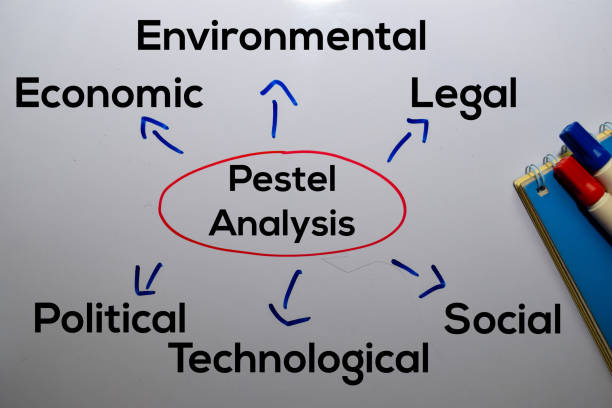
Pestle analysis (Political, Economic, Social, Technological, Legal, and Environmental) describes or gives an overview of different macro-environmental factors that an organization needs to consider when conducting a strategic analysis. It is the scanning of different small environmental factors. These are factors that affect the growth or hindrance of an organization and are beyond the organization's control. This model has been extended by the addition of Ethics and Demographic factors.
Political: It examines government policies, stability, and regulations.
Economic: It analyzes economic conditions, such as inflation, trade policies, etc.
Social: It considers cultural, demographic, and societal trends.
Technological: This focused on technological advancement and innovations.
Legal: It looks at laws, regulations, and legal frameworks.
Environmental: This addresses environmental factors and sustainability issues.
By using PESTLE Analysis, one can;
Find out the issues beyond the organization's control. Examples could be political or environmental factors.
Identify the impact of these issues on the organization.
See how important these issues are to the organization.
Draw statistics showing the likelihood of this occurrence.
Consider its implications if this issue does occur.
Strategic Analysis and Market Research
Conducting market research is key to the growth of an organization. This is a way of researching your consumers or clients to know how they feel about your products or services, their tastes or preferences, what they would have loved your organization to include or take out from its products or services, etc. Market research is very important when conducting a strategic analysis. This puts you in a place where you see yourself as the consumer and try to implement a product or service that will suit your taste. Every consumer wants to buy a product or service that adds value to them. So, knowing what to do to make your services acceptable is key. Conducting market research can help an organization know what to do when introducing new products into the market or innovating customer's ideas on products or services.
Market research is like conducting a poll or a survey. This could be qualitative or quantitative. The data drawn from this survey would be used as a guideline when conducting a strategic analysis for your organization. For example, through market research, an organization can know the degree of its brand recognition. This will help in the proper planning of market campaigns for their products or services.
Advantages of Strategic Analysis
In conducting a strategic analysis, strategic planning is carried out and implemented. The strategic analysis does not stop here. It is a continuous process. An organization needs to study the impact of the implementation and work on processes to do better again. However, this process contributes to the growth of the business and the health of the organization. Here is a list of the Advantages of Strategic Analysis below;
Strategic analysis helps to identify the internal and external strengths and weaknesses that help an organization to grow.
It points out that these areas should be protected and run consistently to promote the growth of the organization.
Internal analysis helps to determine the positive areas or strengths of an organization that help it to grow.
It also helps to identify and effectively use the internal factors that add to the growth of the organization and carefully use them as an advantage over competitors.
Disadvantages of Strategic Analysis
As we have discovered, strategic analysis is a continuous process that does not stop, it has disadvantages as much as it has advantages. Here are two key disadvantages of conducting a strategic analysis.
It helps to identify and generate too many creative ideas but does not tell exactly which one to follow.
It is time-consuming, and this process affects the time to innovate new products or services at the organizational level.
In conclusion, strategic analysis is of great importance to an organization. It helps an organization to map out the internal and external factors necessary for its growth and advancement. Conducting a strategic analysis should be a long-term process to achieve the goals and mission of an organization.
If you need a firm that is dedicated to helping organizations just like yours to map out strategies, take surveys, and draw conclusions that will enhance the growth of your organization, then, reach out to Phos Consult today!
To receive updates and the newest information from us, sign up for our newsletter below!
Sign up for our newsletter
Stay up to date with the roadmap progress, announcements and exclusive discounts feel free to sign up with your email.